
Arrest Records Across Connecticut
Connecticut arrest records begin with the agency that acts. Municipal police handle events within their towns. Connecticut State Police serve highways, resident-trooper towns, and assigned investigations. Campus, tribal, transit, airport, and other special-jurisdiction agencies create their own files when authorized. Federal agencies keep federal arrest material. The correct request goes to the creator's records or freedom-of-information unit.
Connecticut abolished county government and county sheriffs. There is no county booking office to search. Municipal lockups may hold someone briefly. If detention continues after court, the unified Connecticut Department of Correction can hold both unsentenced and sentenced people. Connecticut SPBI may receive fingerprint-supported arrest submissions, and the Judicial Branch creates a separate court docket if prosecutors file charges. One event can thus appear in several systems at different times.
Who Creates Connecticut Arrest Records
The agency type determines both jurisdiction and access. A town police department keeps its incident and arrest report. Connecticut State Police routes requests through DESPP Reports and Records or a troop as directed. A university department controls its campus record. Tribal and special agencies respond for matters within their authority. Once a criminal prosecution begins, the court clerk holds the docket rather than the arresting agency.
| Connecticut Agency | Record Role | Request Route |
|---|---|---|
| Municipal police | Local incident, arrest, and booking documentation | Department Records or FOI unit |
| State Police | Troop and statewide-authority arrests | DESPP Reports and Records or directed troop |
| Campus police | University-jurisdiction incidents and arrests | University police records office |
| Tribal or special agency | Authorized reservation, transit, airport, or authority matters | The creating agency |
| Connecticut SPBI | Compiled fingerprint-supported criminal history | Official SPBI request product |
Ask for the right record. The police narrative covers the event and initial allegation. The court docket covers filed charges and outcomes. SPBI supplies an identity-linked product within its stated scope. CT DOC supplies custody fields, not the police investigation. The DESPP Reports and Records hub routes State Police incident requests. No one source replaces all the others.
From Connecticut Arrest to Rap Sheet
An officer first creates incident and arrest documentation. Booking confirms identity and aliases, notes property, takes a photograph and fingerprints where applicable, and assigns agency or custody identifiers. A fingerprint transaction can reach the State Police Bureau of Identification with a transaction control number. Prosecutors may later file different charges from those listed at arrest. The Superior Court disposition is then reported back to the statewide history.
Data flow: Arrest › Booking › Fingerprint Submission › Connecticut SPBI Entry › Court Disposition
Independent timestamps explain why fresh Connecticut arrest records may disagree. Police can show an arrest before a case appears online. CT DOC may show current detention before the court or repository catches up. A name-only or unmatched transaction can also produce gaps. When a court outcome is missing from SPBI, obtain the certified disposition and follow the official correction route instead of guessing at the result.
Note: Recent Connecticut arrest, custody, court, and SPBI entries can update on different schedules without any source being inherently false.
Connecticut DOC Search Timing
Connecticut has no county jails. CT DOC operates a unified system with correctional centers for unsentenced people and institutions for sentenced people. Its locator can be searched with a CT DOC inmate number or a combination of name and date of birth. A profile may list the inmate number, latest admission, current location, status, controlling offense, sentence, release estimates, special-parole end, and supervision indicators.
The official CT DOC inmate-search entry explains the statewide custody route.
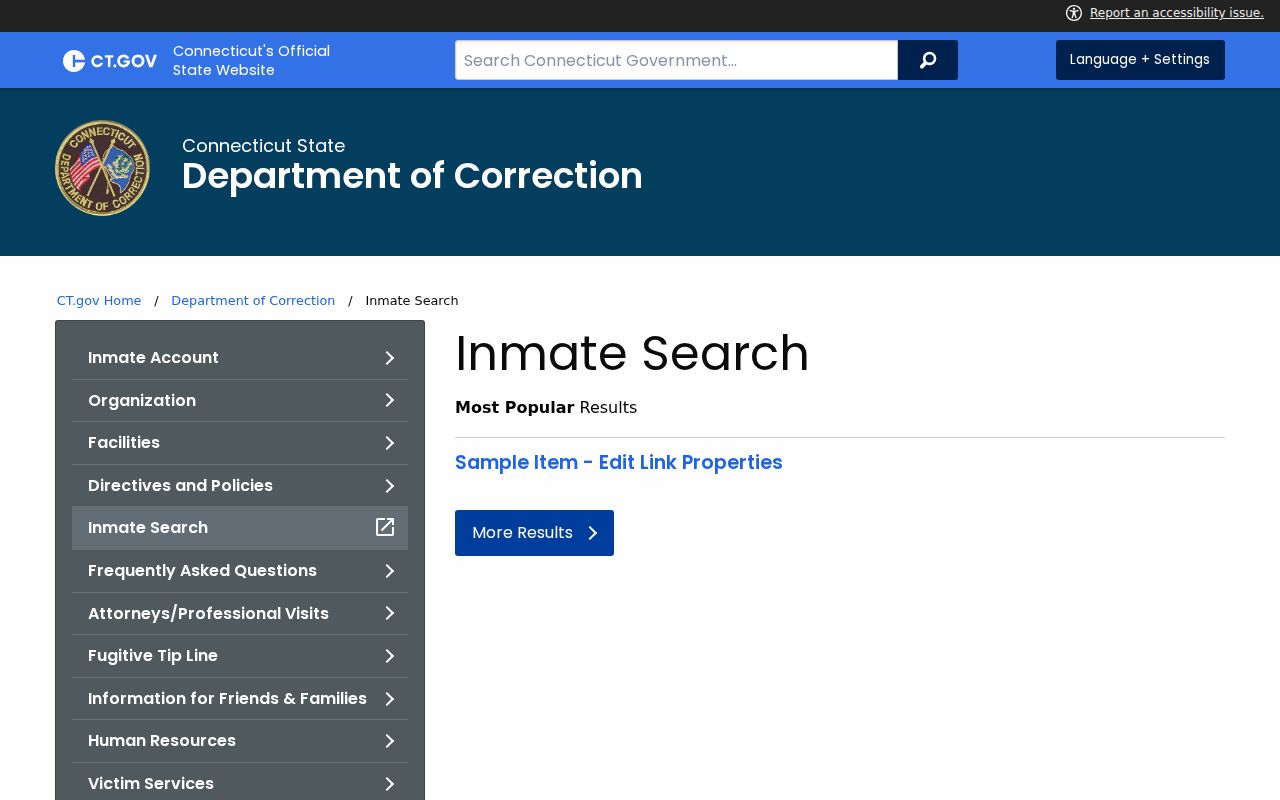
That entry is best used after police and court checks when ongoing state custody is possible. The direct CT DOC Offender Information Search shows the actual query controls.
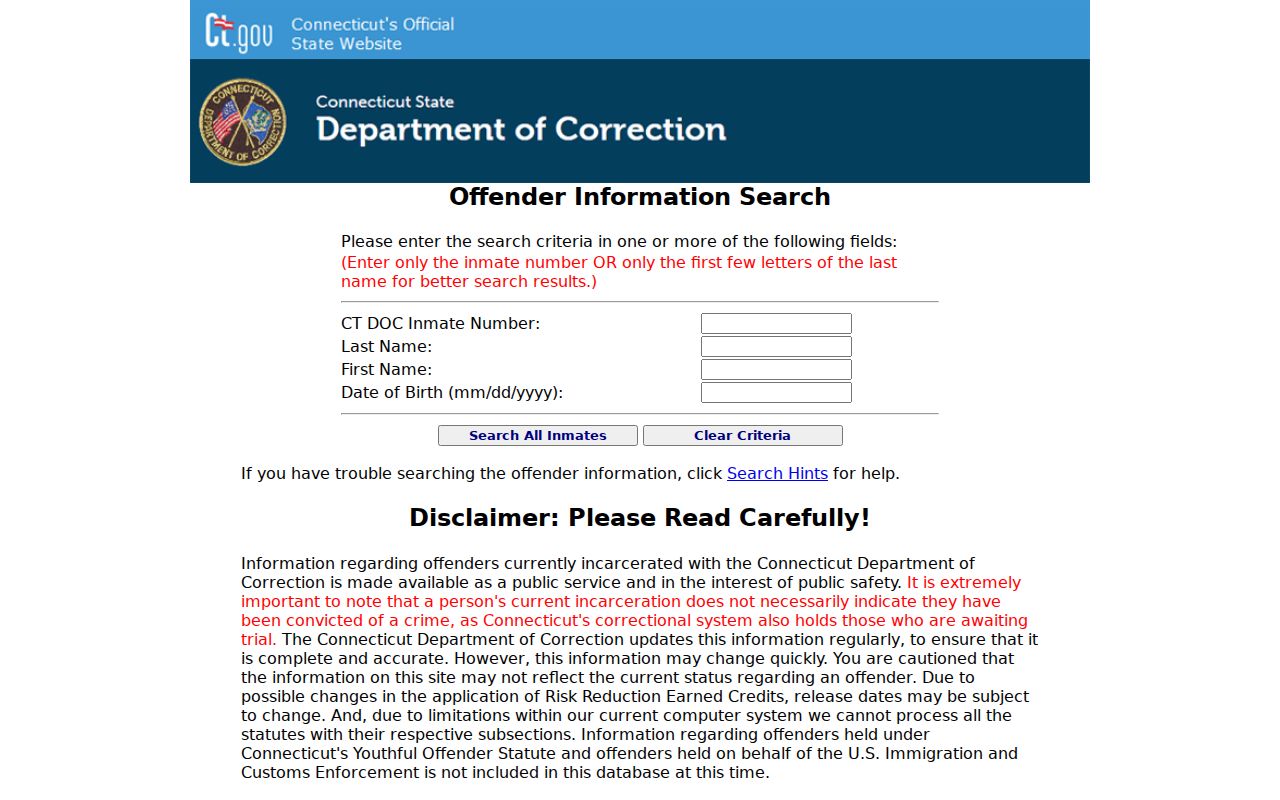
The displayed fields connect the search form to Connecticut's unified custody record. The system refreshes nightly. A blank same-day result can mean release from a municipal lockup, processing lag, or no transfer to DOC. It is not proof that no arrest occurred.
Connecticut Arrest Lookup Options
A recent Connecticut arrest search should move from the event outward. Start with the likely police agency because it holds the first report and may publish an arrest log. Use the locality rather than a fictional county sheriff. Then check custody, the pending court docket, and finally the statewide history product as the question requires.
- Identify the town, approximate event time and place, and likely municipal, state, campus, tribal, or special-jurisdiction agency.
- Check that agency's arrest log or contact its records unit. Request the incident or arrest report with a report number, date, and location when known.
- Search CT DOC by inmate number or name and birth date if continuing custody is possible, while allowing for the nightly refresh.
- Search the Judicial Branch pending-case and Daily Docket routes after arraignment, then save the docket and court location.
- Use Connecticut SPBI for an official statewide history product, not as the fastest check of an hours-old event.
- Open the directory of 27 Connecticut localities to reach the appropriate local context, then verify the final court disposition.
The sequence prevents a common mistake: treating a custody entry or arrest allegation as a final result. For a court outcome, use the Connecticut court case lookup and confirm the disposition with the listed Superior Court clerk.
Connecticut Arrest Data Since 2014
The DESPP Crimes Analysis Unit administers Connecticut UCR and NIBRS reporting. Its Crime Data Repository contains crimes and arrests reported from 2014 forward by 108 participating agencies, including State Police, municipal, university, tribal, and special jurisdictions. Connecticut fully moved to incident-based reporting in 2021. DESPP recommends legacy summary data for comparisons before that point and rolls newer incident-based data into comparable totals.
The official Connecticut UCR repository describes coverage and reporting cautions.
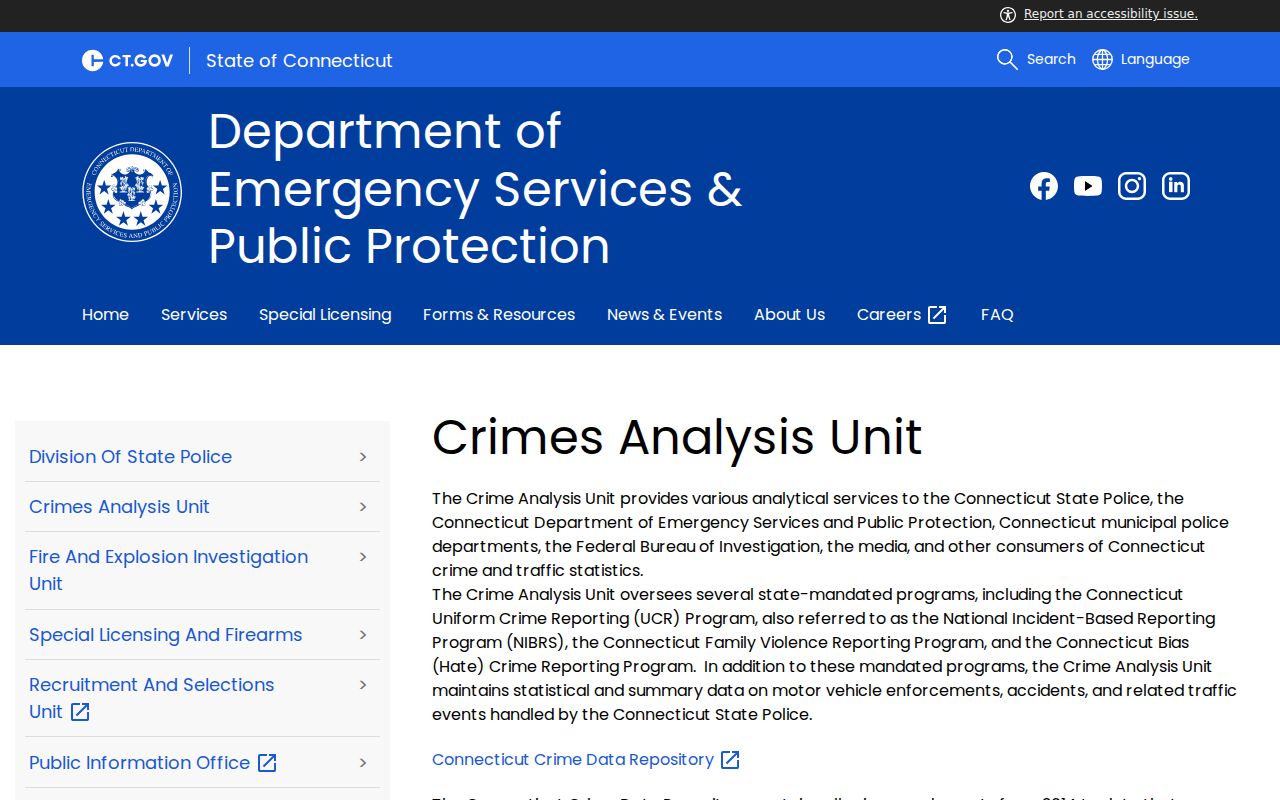
This dataset measures reported activity. It is not a person lookup, and agencies remain responsible for accurate and timely submissions. Connecticut's annual crime-report series began in 1978. The current DESPP crime-data reports hub links annual and quarterly releases.
The report page ties aggregate Connecticut arrest trends to dated releases rather than to personal records. Use its dated tables for exact totals because the live repository changes. A high count may reflect enforcement, citations, visitor activity, and reporting practice, not just resident crime.
Note: Connecticut UCR totals describe reported agency activity and cannot establish how many unique people were arrested or later convicted.
Fields on a Connecticut Arrest Record
A Connecticut arrest record focuses on the event and intake. Fields vary by agency and disclosure law. Some identifiers may be protected in the released copy. The record may later cross-reference court or custody information, but an arrest file does not by itself establish how prosecutors charged the matter or how a judge resolved it.
| Identity | Full name, aliases, date of birth, physical descriptors, and agency identifiers where releasable. |
|---|---|
| Arrest Event | Report or arrest number, date, time, location, agency, and officer information. |
| Arrest Basis | Warrant or warrantless basis and alleged offense, statute, and class at that time. |
| Booking | Fingerprint transaction control number, photograph, property, evidence, and intake details where public. |
| Release | Bond, release status, court location, and next court date as recorded then. |
| Later Link | Disposition cross-reference when reported, which still should be checked against the court file. |
Juvenile and Youthful Offender information is generally confidential. A released adult file may redact victims, witnesses, medical or mental-health intake, account numbers, social security numbers, and facts that could harm an active investigation. Connecticut FOIA favors release of nonexempt portions, but that does not make every booking field or image public.
Connecticut Arrest Types in UCR
The 2024 Crime in Connecticut report defines three arrest types for statistical reporting. An on-view arrest follows an officer's apprehension without a prior warrant or report. A summoned or cited arrest records a person directed to appear rather than taken into custody. A warrant arrest is based on a warrant or prior incident. These categories help explain why an arrest count does not equal a jail-admission count.
UCR counts are aggregates, not individual histories. They do not show how many unique people were arrested and cannot establish guilt. Records that fail FBI edits are not published, while agencies may update incidents later. For events before 2014, use older published summary reports and agency archives rather than assuming the online repository is complete.
Connecticut VINE and DOC Compared
CT DOC search and VINE overlap, but they serve different needs. The DOC locator displays statewide custody and sentence-related fields from its nightly data. VINE supports custody-status checks and notifications. Neither supplies the municipal police narrative or proves a conviction. A court bond order and pending docket remain separate sources.
The Connecticut VINE service shows the custody-search and notification route.

VINE can help track later custody changes, while CT DOC is the direct official source for its current profile fields. If DOC shows an “Accused” status, read it as detention status, not a judgment of guilt. Check the pending Superior Court docket and bond order. If a same-day arrest has no DOC match, return to the police and court channels, then retry after the nightly refresh.
Note: Connecticut VINE notifications supplement the CT DOC profile and do not replace the criminal court judgment or police report.
Connecticut Arrests and Convictions Compared
An arrest is an accusation event. A conviction is a court judgment based on a guilty plea or verdict. Connecticut law preserves core public adult arrest information under CGS §1-215 while permitting lawful protection of investigative and sensitive details. Nonconviction dissemination is also limited. A public arrest entry is never permission to state that the person committed the alleged offense.
| Question | Arrest Record | Conviction Record |
|---|---|---|
| Created by | Arresting police or other authorized agency | Superior Court judgment, later reported to SPBI |
| What it proves | An arrest or citation was recorded | Guilt was established by plea or verdict |
| Best detail | Event, original allegation, booking, and release data | Filed count, disposition, and sentence |
| Access limits | Redaction, investigation, juvenile, and erasure rules apply | Web window, confidential-case, and erasure rules apply |
| Connecticut relief | Qualifying nonconvictions can be erased | Eligible convictions may qualify through Clean Slate or pardon routes |
No broad Connecticut rule was found that makes every booking photograph an always-public download. Request a specific photograph or report from the creating agency under Connecticut FOIA and accept lawful redaction. CT DOC is not a mugshot gallery. Commercial arrest-photo sites should not be used as substitutes for official police, court, or correctional records.
Older Connecticut arrest records may remain off the web without being destroyed. Municipal retention schedules, pending requests, litigation holds, prosecution needs, and erasure duties all affect preservation. Give the creator an approximate date, place, case number, and names when asking for an archive search. Date every result and recheck the latest court disposition, since a correction, pardon, or erasure can make an old saved copy obsolete.
Note: A Connecticut arrest entry without a disposition is not proof of guilt; confirm each count in the Superior Court record.